


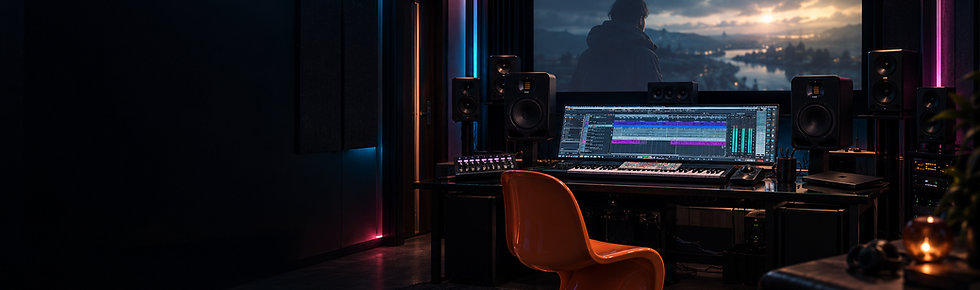
Documentary Audio Post-Production for Independent Filmmakers
Clear dialogue. Natural atmosphere. A final mix that protects the truth of the scene.

A documentary is built from real voices, real locations, and moments that may never happen in the same way again.
That is why documentary sound needs more than automatic noise reduction or simple volume adjustment.
Hybrid Sound Reform provides remote audio post-production for independent documentaries, short and feature-length films, international productions, and projects preparing for film festival or theatrical screening.
From detailed dialogue editing and difficult interview cleanup to ambience, sound effects, music balance, and the final stereo or 5.1 mix, I shape the soundtrack so the audience can follow the story without losing the reality of the original recording.
Documentary Sound Begins with the Voice
In many documentaries, the most important material is also the least replaceable.
An interview may contain a personal memory, an unexpected answer, an emotional hesitation, a child’s voice, historical testimony, or a conversation captured only once on location.
If that recording contains traffic, air conditioning, room reflections, clothing noise, microphone handling, inconsistent levels, or a distant voice, the goal is not to make it artificially perfect.
The goal is to help the audience understand what matters while preserving the speaker’s character, emotion, and connection to the location.
Every decision must support the film—not simply produce a cleaner-looking waveform.
Documentary Audio Post-Production Services
Dialogue Editing
Dialogue editing is the foundation of a documentary soundtrack.
I review and organize production dialogue, select the most usable microphone material, reduce distracting inconsistencies, smooth edits, and balance different speakers and recording conditions.
This may include:
-
Matching interviews recorded in different rooms or locations
-
Reducing sudden level changes between speakers
-
Smoothing edits between separate answers or camera angles
-
Managing differences between lavalier, boom, camera, and recorder audio
-
Preserving breaths, pauses, and natural vocal texture
-
Improving continuity without making every voice sound processed
The objective is not to make the editing audible. It is to let the conversation flow naturally.
Interview Cleanup and Audio Restoration
Documentary recordings often contain several problems at the same time. A single interview may include steady background noise, changing traffic, room echo, clothing rustle, clicks, impacts, and uneven microphone distance.
These problems rarely respond well to one strong process applied across the entire track. I separate broad problems from local ones and use different methods where necessary, including spectral inspection and detailed manual repair.
Depending on the source, I may be able to improve:
-
Air-conditioning and ventilation noise
-
Electrical hum and hiss
-
Traffic and environmental noise
-
Camera and equipment sounds
-
Light clothing or handling noise
-
Clicks, mouth noise, and short impacts
-
Uneven dialogue levels
-
Muffled, harsh, or distant speech
-
Inconsistent interviews recorded across multiple locations
Not every recording can be fully restored. When sound has been permanently masked, clipped, distorted, or lost, I explain the limitation honestly and recommend the most realistic approach.
Learn more about [Audio Restoration for Documentary Film & Difficult Dialogue].
Ambience and Room-Tone Editing
A documentary should not become unnaturally silent after dialogue cleanup.
Room tone, location atmosphere, and environmental sound help the audience understand where they are and make interview edits feel believable. I use the available production sound to smooth transitions, repair gaps, and maintain continuity between shots.
Where appropriate, this may involve:
-
Rebuilding room tone around edited dialogue
-
Smoothing changes between camera angles or interview sections
-
Preserving meaningful environmental detail
-
Reducing distracting background changes
-
Supporting location changes with natural ambience
-
Preventing noise reduction from making the soundtrack feel empty
The aim is not silence. It is a controlled and credible sense of place.
Sound Effects and Practical Sound Design
Some documentaries need only subtle support. Others require additional sound editing to clarify actions, locations, archive sequences, transitions, or reconstructed scenes.
I can organize and balance existing effects, add practical sound elements where they are needed, and shape transitions without turning a factual film into an exaggerated cinematic performance.
The level of sound design is discussed according to the film’s style, available materials, schedule, and budget.
Music and Narration Balance
Music should support the story without reducing speech intelligibility or forcing the audience to adjust the volume constantly.
I balance dialogue, narration, music, ambience, and effects across the full program, using detailed level automation rather than relying only on broad compression or automatic ducking.
This helps maintain clarity while preserving musical impact and emotional movement.
Final Stereo or 5.1 Mix
The final mix brings the entire soundtrack together.
I check dialogue clarity, scene-to-scene consistency, music and effects balance, low-frequency energy, dynamics, and overall loudness in a calibrated monitoring environment.
Depending on the project, delivery can include:
-
Full stereo mix
-
5.1 surround mix
-
Stereo fold-down or reference version
-
Dialogue, music, and effects stems
-
Alternate mixes when agreed in advance
-
Audio masters prepared to supplied festival, screening, or distribution specifications
If the destination has specific technical requirements, please send them before the final mixing stage.
Common Documentary Audio Problems
You may benefit from professional audio post-production if your film contains:
-
Important interviews recorded in noisy locations
-
Dialogue that changes dramatically from shot to shot
-
A distant microphone or excessive room reflections
-
Lavaliers affected by clothing rustle
-
Camera, handling, or equipment noise
-
Interviews recorded with different microphones
-
Dialogue that becomes difficult to understand under music
-
Abrupt silence or background changes around edits
-
Archive recordings that do not match modern material
-
A rough mix that sounds acceptable on headphones but unstable on speakers
-
Uncertainty about loudness, stems, stereo, or 5.1 delivery
A finished documentary is judged as one continuous experience. Solving isolated noises is important, but the full soundtrack must also feel consistent from beginning to end.
My Audio Post-Production Workflow
1. Project and Material Review
Before work begins, I review the film’s length, stage of editing, recording conditions, intended release, schedule, and available audio materials.
For an accurate assessment, a reference video and representative problem sections are especially useful.